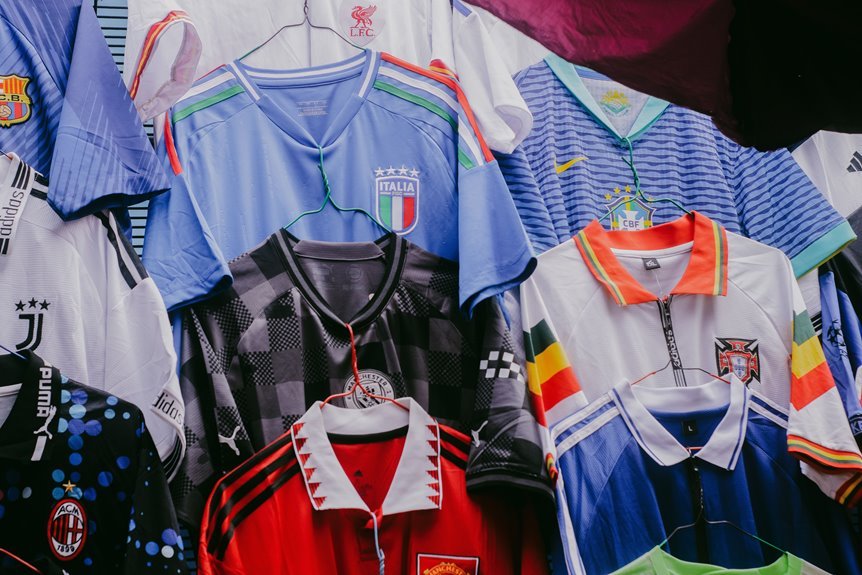
When Brazil lifted the World Cup trophy for the fifth time in 2002, it marked a pinnacle in football history. Each champion, from Uruguay’s inaugural win to Italy’s tactical mastery, has shaped the game’s narrative in unique ways. You might wonder how these victories influenced not only national pride but also the evolution of playstyles. Understanding these dynamics reveals more than just stats; it uncovers the essence of football itself.
World Cup Dominant Nations: A Closer Look
When you delve into the history of the FIFA World Cup, it’s clear that certain nations have consistently outperformed others, shaping the tournament’s legacy.
Brazil’s dominance, Germany’s resilience, and Argentina’s flair exemplify success.
Italy’s strategy and France’s evolution highlight tactical depth, while Spain’s tiki-taka revolutionized play.
England’s legacy and the Netherlands’ creativity further enrich this vibrant tapestry of football excellence.
Iconic World Cup Moments: The Best Matches and Upsets
Throughout the history of the FIFA World Cup, unforgettable matches and shocking upsets have etched themselves into the hearts of fans, proving that anything can happen on football’s biggest stage.
Legendary comebacks, like those seen in 1950 and 1998, showcase the drama, while unforgettable goals often define careers.
These moments remind us that in football, the unexpected is always possible.
Early World Cup Winners and Their Impact
As the FIFA World Cup kicked off in 1930, early winners like Uruguay and Italy not only claimed glory on the pitch but also helped elevate football’s status globally.
Their triumphs during pre-war tournaments fostered national pride and inspired player legacies that resonate today.
These victories laid the groundwork for football’s global influence, shaping the sport’s identity and uniting fans across borders.
How World Cup Rules and Playstyles Have Evolved
While the FIFA World Cup has remained a pinnacle of football excellence, the rules and playstyles have transformed dramatically since its inception.
You’ve witnessed tactical evolution driven by rule changes and player development. Additionally, technological advancements like VAR have reshaped strategies and fairness.
As teams adapt, the beautiful game continues to evolve, reflecting the growing complexity and creativity of modern football.
Conclusion
The FIFA World Cup isn’t just a tournament; it’s a celebration of football’s evolution and a showcase of national pride. Each victory tells a story of skill, strategy, and passion that resonates with fans worldwide. As you reflect on the rich history of champions, you might wonder: what moments from this grand stage will inspire the next generation of players? The legacy of the World Cup continues to shape football, leaving us eagerly anticipating the next chapter.