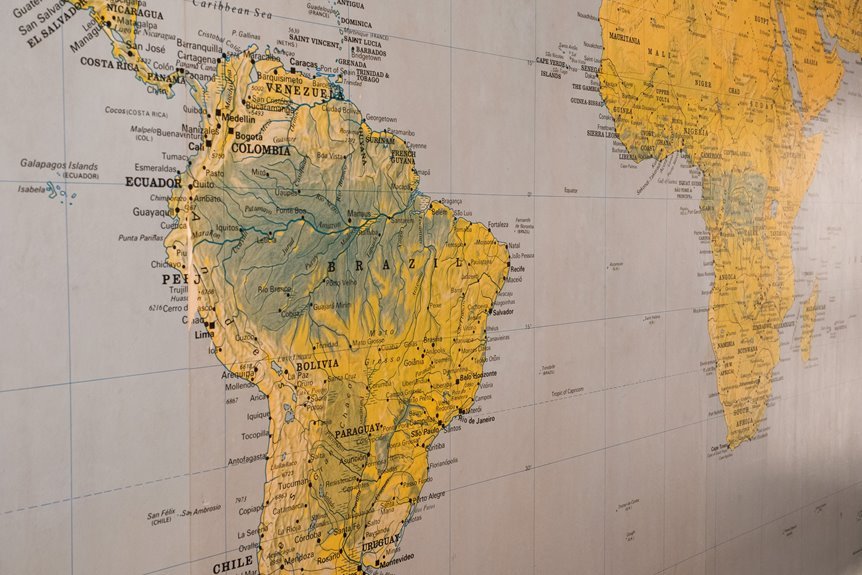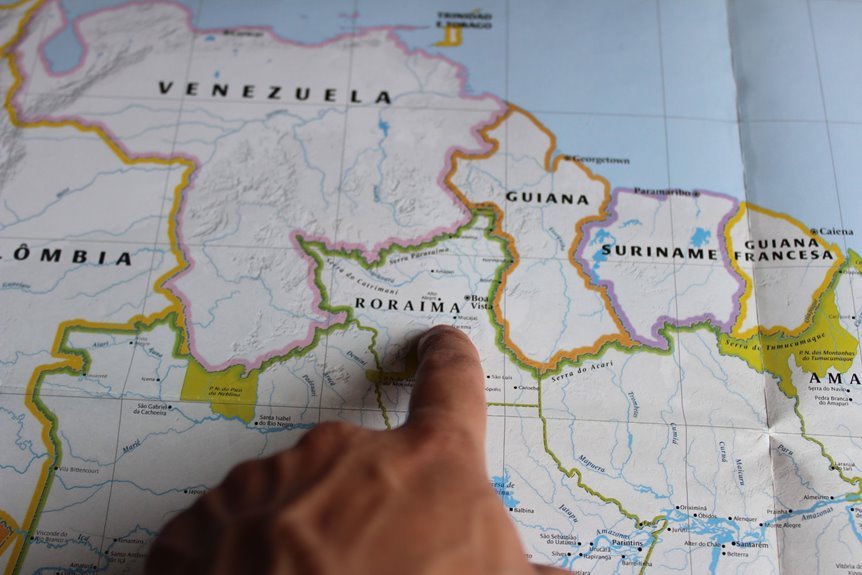
Did you know that Venezuela covers over 916,000 square kilometers, making it one of the largest countries in South America? Its strategic location along the Caribbean Sea and borders with Colombia, Brazil, and Guyana not only shapes its trade routes but also influences its political and cultural landscape. Understanding where Venezuela sits on the map reveals much more than geography; it opens a conversation about its complex relationships and rich natural diversity.
Where Is Venezuela on the Map?
Have you ever wondered where Venezuela sits on the map? Nestled on the northern coast of South America, its geography reveals a diverse landscape, from the Andes mountains to the Amazon rainforest.
Venezuela’s location, bordered by the Caribbean Sea, provides strategic access to vital trade routes. Understanding its geography is crucial for grasping the nation’s potential for freedom and growth amidst challenges.
Venezuela’s Borders: Neighboring Countries and Their Impacts
Venezuela shares its borders with three countries: Colombia to the west, Brazil to the south, and Guyana to the east.
These borders are marked by ongoing border disputes that affect regional trade and stability.
Colombia plays a crucial role in both trade and migration, while Brazil’s influence can impact economic partnerships.
Understanding these dynamics is essential for grasping Venezuela’s geopolitical landscape.
Natural Landmarks of Venezuela
While exploring the natural landmarks of Venezuela, you’ll discover a diverse array of ecosystems, from the towering peaks of the Andes to the lush expanses of the Amazon rainforest.
Don’t miss Angel Falls, the world’s highest waterfall, or the vast Orinoco River.
The stunning Caribbean Coast and the unique formations of the Guiana Highlands, along with the idyllic Los Roques, highlight Venezuela’s rich biodiversity.
Cultural Aspects Linked to Venezuela’s Geography
As you delve into Venezuela’s geography, you’ll notice how its varied landscapes profoundly influence cultural practices and traditions.
The nation boasts rich cultural diversity, shaped by Indigenous heritage and urban versus rural lifestyles. Traditional cuisine reflects local ingredients, while music influences echo the land’s rhythms.
Folklore stories and vibrant festival celebrations highlight language variations, showcasing a unique tapestry of Venezuelan identity and freedom.
Conclusion
In conclusion, Venezuela’s location serves as a striking contrast between its lush Amazon rainforest and the towering Andes mountains. This unique geographical positioning not only shapes its natural beauty but also influences its complex relationships with neighboring Colombia, Brazil, and Guyana. As trade routes intertwine with diverse cultures, you see how Venezuela stands at the crossroads of opportunity and challenge, embodying both the richness of its environment and the weight of its geopolitical significance.